
How Can Dental Clinics Plan Operating Room Rental for General Anesthesia?
Treatment Under General Anesthesia and Operating Room Use for Dentists
Most dental procedures can be carried out in a clinic setting under local anesthesia. However, for some patients, because of the extent of treatment, the patient’s general health, their ability to cooperate with treatment or the nature of the planned procedure, dental treatment under sedation or general anesthesia may be considered.
Not every dental clinic can have its own unit or operating room suitable for general anesthesia. For this reason, a working model that dentists colloquially refer to as “operating room rental” may come into consideration.
However, this process should not be regarded simply as renting an operating room for a set number of hours. Dental treatment under general anesthesia is a healthcare service in which a licensed healthcare facility, the anesthesia team, the dentist, patient records, the necessary medical assessments and post-procedure follow-up are all planned together.
Current regulations in Turkey also address this matter within the framework of the operating principles and responsibilities of healthcare facilities. Therefore, a dentist planning a general anesthesia case should first assess whether the healthcare facility they will work in complies with the regulations and what notifications are required for their own way of working.
Can General Anesthesia Be Performed in a Dental Clinic?
The answer to this question depends on the type of license held by the healthcare facility and the units it has.
Under the Regulation on Private Healthcare Facilities Providing Oral and Dental Health Services, diagnostic and treatment procedures under sedation or general anesthesia cannot be performed in private dental practices.
The same regulation provides that dentists practicing independently in private practices and polyclinics may, provided that they submit a written notification to the Provincial Health Directorate, have diagnostic and treatment procedures for their patients under general anesthesia or sedation carried out in healthcare facilities with a general anesthesia intervention unit or in suitable private healthcare facilities outside the scope of the relevant regulation.
In practice, therefore, the phrase “renting an operating room” should be understood as carrying out the dental treatment of one’s own patient at another licensed healthcare facility by making use of its suitable infrastructure in compliance with the regulations.
What Should Be Checked First When Choosing an Operating Room?
Not every operating room has the same working arrangements for dental general anesthesia cases.
The dentist should first find out the scope of the healthcare facility’s license and activities, whether it has a unit where general anesthesia can be administered and whether it accepts dental cases.
In addition, it is important to assess the infrastructure available during and after the procedure.
An anesthesia machine, appropriate monitoring systems, oxygen and suction systems, airway management equipment, emergency drugs and devices, and a post-anesthesia recovery area are among the items that may be included in this assessment.
The American Society of Anesthesiologists emphasizes the importance of having appropriate monitoring, resuscitation equipment and post-procedure care facilities in dental settings where sedation or general anesthesia is administered.
For this reason, when choosing an operating room, one should look not only at the physical room but at the anesthesia service as a whole.
How Is Treating One’s Own Patient in an Operating Room Planned?
The first stage of the process is the dental assessment.
The dentist examines the patient, carries out the necessary radiographic assessments and determines which procedures are planned for which teeth.
The need for general anesthesia should not be assessed solely on the number of procedures to be carried out. The patient’s age, general health, ability to cooperate with treatment, dental anxiety, the duration of treatment and the feasibility of alternative methods may also be taken into account.
The dental treatment plan is the responsibility of the dentist, while the assessment of fitness for anesthesia is the responsibility of the anesthesiologist.
For this reason, it is important that the two assessment processes progress in coordination before an operating room date is set.
How Does the Anesthesiologist Assess the Patient?
A patient for whom general anesthesia is planned needs a pre-procedure anesthesia assessment.
This assessment reviews the patient’s existing medical conditions, regular medications, known allergies, previous surgeries and previous experiences with anesthesia.
Depending on the patient’s medical condition, additional tests or an opinion from another specialty may be required.
A blanket approach that the same tests should be requested from every patient is not correct. The investigations that may be requested can be determined according to the patient’s age, general health, medical history and the nature of the planned procedure.
A decision to use general anesthesia should not be made solely because of the length of the dental treatment or the patient’s wishes before the anesthesiologist’s assessment has been completed.
Is Notification to the Provincial Health Directorate Required?
The provisions on operating principles in the regulation currently in force in Turkey stipulate that dentists practicing independently in private practices and polyclinics must submit a written notification to the Directorate in order to have their patients’ procedures under general anesthesia or sedation carried out in another suitable healthcare facility.
For this reason, before a dental clinic or dentist starts using an operating room, it would be advisable to confirm the current procedure with the Provincial Health Directorate according to their own license type.
Because healthcare regulations can change over time, one should not rely solely on an old contract or on a working model previously used by another dentist.
What Should a Protocol or Contract Between Facilities Look Like?
It is important that the administrative and legal framework of the working model between healthcare facilities is clear.
Matters such as operating room hours, which facility will provide the anesthesia service, support staff, sterilization, materials used, medications, laboratory and imaging services, post-anesthesia follow-up and a possible need for hospital admission can be agreed in advance.
However, this arrangement should not be thought of merely as a commercial “hourly operating room rental agreement”.
In terms of patient care, it must be clear which healthcare facility provides which service, where records will be kept and how responsibilities will be carried out.
The regulation stipulates that records of patients treated in this way are kept at both healthcare facilities and that the two healthcare facilities are jointly responsible for the diagnostic and treatment services provided.
This provision clearly shows why the operating room use model cannot be treated simply as renting physical space.
How Should Patient Records and the Consent Process Be Managed?
The record system is particularly important for dental procedures performed under general anesthesia.
Dental examination findings, radiographs, planned treatments, medical history and the anesthesia assessment should be available in the relevant record systems.
The patient or their legal representative should be informed separately about the planned dental procedures and the anesthesia process.
Consent to dental treatment and information and consent regarding anesthesia are separate medical processes.
If there is a possibility of encountering an unforeseen dental problem during the procedure, it may be appropriate to discuss in advance with the patient or their legal representative within what limits the treatment plan may be changed.
Who Takes Part on the Operating Room Day?
The team structure may vary depending on the nature of the case and the working arrangements of the healthcare facility.
Usually, the dentist or dentists performing the dental procedure, the anesthesiologist, the anesthesia team and the operating room staff work together.
The dentist’s role is to carry out the dental treatment; the anesthesiologist’s role is to manage the anesthesia and monitor the patient’s physiological status.
Keeping these roles separate is important for patient safety.
The WHO Surgical Safety Checklist also recommends that the team checks identity, the procedure, the anesthesia machine, allergies, the airway and other important safety items before anesthesia, before the procedure and before the patient leaves the operating room.
Who Provides the Dental Materials?
This should be clarified in advance between the healthcare facilities.
In some operating rooms, anesthesia equipment and standard operating room consumables are supplied by the healthcare facility, while dental devices, surgical kits, implant systems or restorative materials may be brought by the dentist.
Sterilization methods and how surgical kits brought in from outside are accepted may also vary according to operating room procedures.
For this reason, preparing a detailed list before the day of the case can help prevent the procedure from being disrupted by missing equipment.
How Is Post-Procedure Follow-Up Carried Out?
The completion of the dental procedures does not mean the operating room process is over.
The patient is assessed in the post-anesthesia recovery area. Criteria such as level of consciousness, breathing and circulation are monitored, and fitness for discharge is assessed by the relevant team.
While some patients can be discharged the same day, longer follow-up may be needed due to the patient’s medical condition or the nature of the procedure performed.
For this reason, when choosing an operating room, it is important to look not only at the operating room itself but also at post-anesthesia recovery facilities.
Key Organizational Steps for Dental Clinics
In a clinic planning a dental case under general anesthesia, the process can generally be approached in the following order:
First, the patient’s dental treatment plan is prepared. Next, the need for sedation or general anesthesia is assessed. A healthcare facility that complies with the regulations and licensing requirements is identified. The required notification to the Provincial Health Directorate and institutional procedures are completed. The patient is assessed by the anesthesiologist. Dental and anesthesia consent forms are prepared. The devices and materials to be used are planned in advance. Team coordination is ensured on the day of the procedure, and after treatment, post-anesthesia follow-up and the discharge process are carried out.
Rather than seeing the procedure merely as “an operating room booking”, this approach makes it possible to plan all stages of the healthcare service together.
What Should Be Considered When Using an Operating Room?
When assessing the facility where they will work, it may be useful for the dentist to consider the following points:
The scope of the healthcare facility’s license and activities, the availability of a unit suitable for general anesthesia, the presence of an anesthesiologist and the necessary team, monitoring and emergency response infrastructure, a post-anesthesia recovery area, sterilization arrangements, the availability of dental equipment, the patient record system and a clear definition of responsibilities between the facilities.
In addition, depending on the patient’s medical condition, how access to advanced healthcare services or patient transfer processes would be handled when necessary can also be included in the assessment.
Conclusion
Using an operating room for general anesthesia is not simply a matter of dental clinics renting a physical operating room space.
Current regulations in Turkey allow dentists who meet the appropriate conditions to have their patients’ dental procedures under sedation or general anesthesia performed at other licensed healthcare facilities under certain conditions.
When planning, the healthcare facility’s license status, notifications to the Provincial Health Directorate, anesthesia assessment, team organization, patient records, consent, materials used and post-anesthesia follow-up should all be addressed together.
While the anesthesiologist carries out the patient’s anesthesia assessment and manages the anesthesia, the dentist is responsible for the dental diagnosis and treatment plan. The healthcare facility, in turn, runs the infrastructure and healthcare services within the scope of its own license and services.
For this reason, before starting to use an operating room, it would be an appropriate approach for dentists to verify with the Provincial Health Directorate the conditions of the facility where they will work and the current application of the regulations for their own license type.
This article has been prepared for general professional information purposes. Because healthcare regulations and institutional practices may change, current regulations and the practices of the relevant Provincial Health Directorate should be reviewed separately before any specific working model is established.
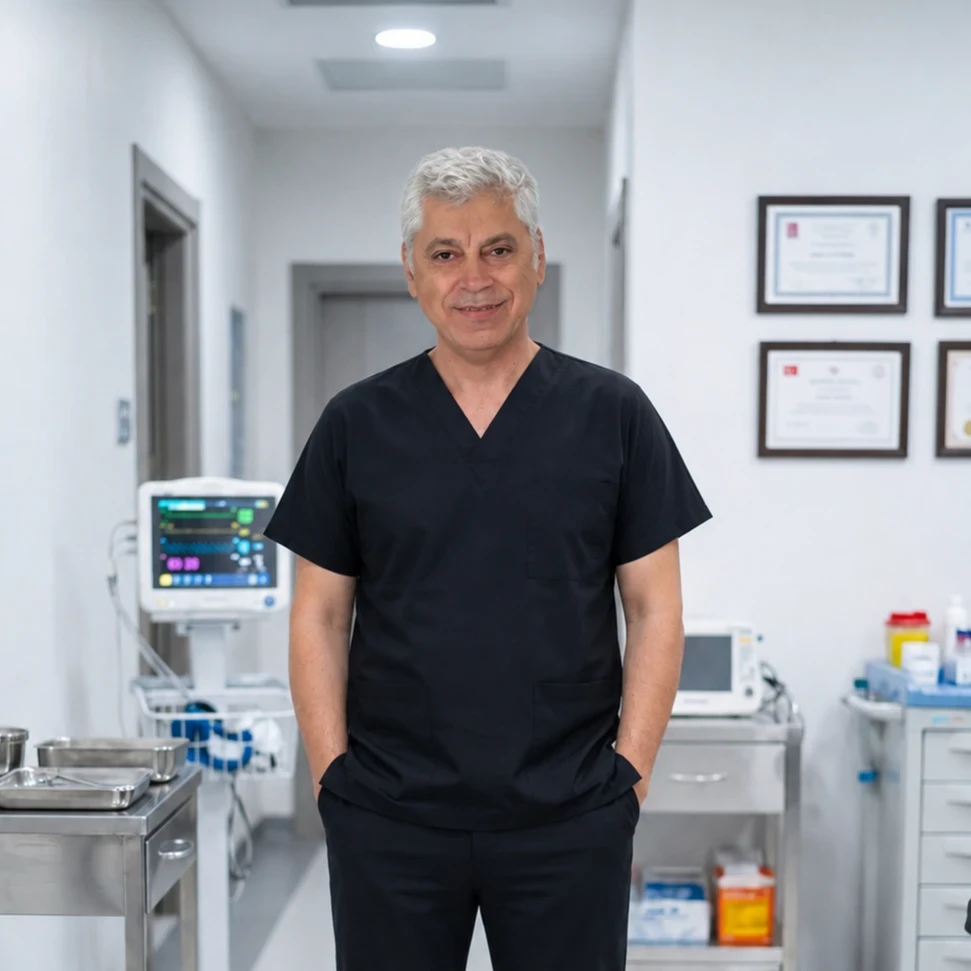
Dr. İHSAN GÜRSOY
Dentist
38 yılı aşkın klinik tecrübesiyle ağız ve diş sağlığı, implantoloji, cerrahi diş çekimleri ve genel anestezi/sedasyon altında çoklu diş tedavileri alanında uzman hekimdir. Yüzlerce hastada korkusuz, ağrısız ve konforlu ameliyathane diş tedavisi süreçlerini bizzat yönetmiştir.
Would You Like to Book an Appointment?
Book an appointment at a time that suits you, or give us a call.