How Can Dentists Use an Operating Room for Dental Treatment Under General Anesthesia?
General Anesthesia, Healthcare Facilities and the Operating Room Process for Dentists
Most dental procedures can be performed under local anesthesia and in standard clinical conditions . Fillings, root canal treatment, tooth extractions, implant surgery and many oral surgery procedures can be planned in a clinic setting, depending on the patient’s medical condition and the nature of the procedure.
However, for some patients, dental treatment under general anesthesia or sedation may need to be considered. Intense dental anxiety, inability to cooperate with treatment, certain communication or movement difficulties encountered in patients with special healthcare needs , the need for extensive treatment in young children, or other clinical reasons may play a role in this assessment.
Not every private dental office or polyclinic where a dentist works has the infrastructure for general anesthesia. This is why a way of working that colleagues commonly refer to as “operating room rental” comes into play.
From a regulatory perspective, however, it is not sufficient to define this process simply as renting an operating room for a certain number of hours. A more accurate description is that the dentist plans their own patient’s dental treatment under general anesthesia or sedation at another healthcare facility that meets the necessary requirements.
Can a Dentist Perform General Anesthesia in Their Own Private Office?
The current regulation setting out the operating principles of private oral and dental health facilities in Türkiye clearly states that diagnosis and treatment under sedation or general anesthesia may not be performed in private dental offices .
The same rule also applies to polyclinics.
On the other hand, Article 19 of the regulation, which governs operating principles, provides that dentists practicing independently in private offices and polyclinics may, provided that they submit a written notification to the Provincial Health Directorate, carry out diagnostic and treatment procedures for their own patients under general anesthesia or sedation at healthcare facilities that have a general anesthesia intervention unit, or at other suitable private healthcare facilities specified in the legislation.
Therefore, what is colloquially called “operating room rental” is essentially carrying out the patient’s treatment at a suitable healthcare facility under specific legal and medical conditions .
Does Every Dental Surgery Require an Operating Room?
No.
A common misconception is that advanced dental procedures such as implant surgery, sinus lifts or bone grafting automatically require an operating room.
A large proportion of these procedures can be performed under local anesthesia, depending on the patient’s health, the scope of the surgery and the clinician’s assessment .
It is therefore not correct to determine the need for an operating room or general anesthesia based solely on the name of the procedure.
The fundamental assessment is patient-specific.
The patient’s general health, anxiety level, cooperation with treatment, the scope and estimated duration of the procedure, and alternative anesthesia methods should all be considered together.
How Does a Dentist Plan a General Anesthesia Case?
The first stage is a detailed dental diagnosis and treatment plan.
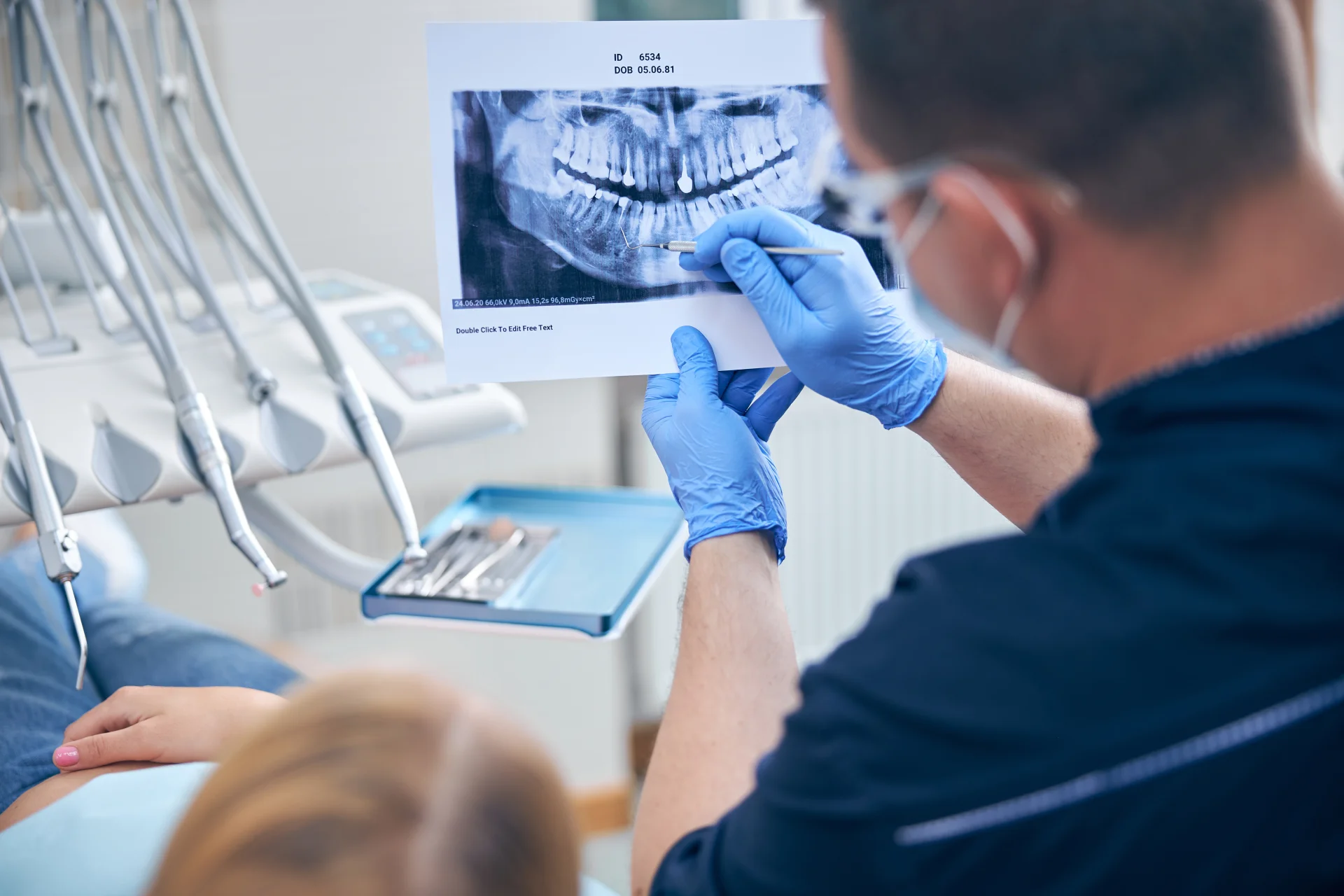
The dentist performs a clinical examination of the patient and evaluates the necessary radiological investigations. Which teeth will be treated, as well as any extractions, restorative procedures, endodontic treatments or surgical interventions, are determined as far as possible before the procedure.
The patient’s need for general anesthesia or sedation is then assessed.
There is an important distinction here:
Dental treatment planning is the dentist’s responsibility, while assessing the patient from an anesthesia perspective is the responsibility of the anesthesiologist.
These two processes complement each other, but one does not replace the other.
In Which Healthcare Facility Can the Procedure Be Performed?
The healthcare facility to which the dentist brings their patient must have the license, physical infrastructure, equipment, staff and monitoring conditions appropriate for the anesthesia method to be used.
The current regulation defines detailed physical and technical standards for general anesthesia intervention units in oral and dental health centers.
These requirements include a general anesthesia intervention room, a preoperative preparation area, a postoperative recovery area, patient monitoring, a medical gas system, an observation area and an uninterruptible power supply.
So when choosing a healthcare facility, simply asking “Is there an operating room?” is not enough.
It is important that there is an organization in place capable of managing the entire process, from the pre-anesthesia assessment to post-procedure observation.
How Should Notification to the Provincial Health Directorate Be Handled?
Under the current regulation, a dentist practicing independently in a private office or polyclinic is required, in order to carry out their patient’s treatment under general anesthesia or sedation at another suitable healthcare facility, to submit a written notification to the Directorate .
Therefore, a dentist who plans to perform general anesthesia cases regularly at another healthcare facility would be well advised, before starting, to confirm the current practice with the relevant Provincial Health Directorate with regard to their own type of facility and the planned way of working.
Because healthcare legislation can change over time, a previously used contract or another dentist’s way of working should not in itself be regarded as proof of compliance with current legislation.
Where Should Patient Records Be Kept?
This point is particularly important.
The regulation states that, for patients treated at another healthcare facility in this way, it is mandatory for records to be kept at both healthcare facilities .
It also provides that both healthcare facilities are jointly responsible for the diagnostic and treatment services provided to the patient. Informing the patient about treatment costs and issuing a detailed invoice are also covered in the relevant article.
For this reason, using an operating room should not be seen merely as:
“I bring my patient, use the operating room for a few hours and leave.”
That is not the right way to look at it.
Patient records, medical responsibility, anesthesia records, dental treatment records, patient information and financial records must all be managed together.
What Should Be Agreed in Advance Between the Dentist and the Healthcare Facility?
In practice, clearly defining certain matters before starting to work with a healthcare facility can help the process run more smoothly.
These may include operating room scheduling, organization of the anesthesia service, auxiliary healthcare staff, the sterilization process, dental equipment and materials, post-anesthesia observation, the patient record system and the procedure to follow in the event of unexpected situations .
It should also be agreed in advance who will supply dentistry-specific equipment such as dental implant systems, surgical kits, the implant motor, piezosurgery unit or restorative materials.
The healthcare facility may have its own procedures for sterile kits brought in from outside.
Completing the organization before the day of the case helps reduce medical and logistical uncertainties.
What Does the Anesthesiologist’s Assessment Include?
A patient scheduled for general anesthesia must be medically assessed before the procedure.
The anesthesiologist reviews the patient’s general health, current medications, allergies, previous illnesses and surgeries, and past experiences with anesthesia.
Where considered necessary, laboratory tests or an opinion from another specialty may be requested.
A standardized approach in which every patient undergoes the same tests is not appropriate.
The need for tests and consultations is determined according to the patient’s health and the planned intervention.
For this reason, scheduling the operating room date and assessing medical fitness should not be considered independently of each other.
How Are Roles Divided on the Day of Surgery?
Teamwork is important in dental cases performed under general anesthesia.
The dentist or the relevant dental team carries out the oral and dental treatment.
The anesthesiologist manages the anesthesia and the monitoring of the patient’s physiological status.
The healthcare facility’s operating room and anesthesia staff also take part in the process within the scope of their own duties and authority.
A combination of roles in which the clinician performing the dental treatment also manages the anesthesia should not be considered.
Each healthcare professional working within their own area of professional responsibility is the foundation of the multidisciplinary approach.
Can Many Procedures Be Performed in a Single Session?
For some patients, more than one dental procedure can be planned in the same session under general anesthesia.
However, the use of general anesthesia does not mean that as many procedures as possible should be performed.
The scope of treatment should be determined by taking into account the patient’s dental needs, the duration of the procedures, the anesthesia assessment and the prognosis of the teeth.
Especially in children or in patients with special healthcare needs, the concern that access to treatment may be difficult in the future can influence planning; however, each procedure must still have its own clinical justification.
Does Using an Operating Room Provide Legal Protection for the Dentist?
Working in an operating room setting does not in itself remove the clinician’s legal responsibility.
Similarly, performing a procedure at a licensed healthcare facility does not mean that “no complications will occur” or that “the risk of malpractice is eliminated” .
What matters in terms of legal and professional responsibility is proper patient assessment, an appropriate indication, adequate information and consent, the keeping of medical records, clearly defined duties and responsibilities, and delivery of the service in compliance with the legislation.
Indeed, the current regulation also clearly states that, for patients treated at another facility in this way, the two healthcare facilities are jointly responsible for the services provided.
How Should the Economic Aspect of Operating Room Rental Be Assessed?
Establishing its own general anesthesia unit can require a healthcare facility to organize significant physical infrastructure, equipment, staff, maintenance and licensing.
For this reason, for a dentist with only a small number of general anesthesia cases, planning cases at another suitable healthcare facility may be considered from an operational standpoint.
However, presenting operating room use as a way to “increase turnover,” “provide a highly profitable service” or “boost brand value” is not consistent with the purpose of healthcare.
The decision must be based on the patient’s clinical need.
The dentist’s economic considerations, on the other hand, can be addressed separately from the medical necessity of care, within the framework of planning how services and costs are organized between the facilities.
Conclusion
The use by dentists of another healthcare facility’s operating room or general anesthesia intervention unit for dental procedures under general anesthesia is a way of working that, under certain conditions, is recognized in current legislation.
However, defining it simply as “operating room rental” can leave out the medical and legal aspects of the process.
Under the current regulation, treatment under general anesthesia or sedation cannot be carried out in private dental offices or polyclinics. On the other hand, dentists practicing independently in these facilities may, by submitting a written notification to the Provincial Health Directorate, have these procedures for their patients carried out at other suitable healthcare facilities. Keeping patient records at both facilities and the joint responsibility of both facilities for the service are also important parts of the regulation.
For this reason, a dentist planning a general anesthesia case needs first to establish the dental indication, choose a suitable healthcare facility, review the Provincial Health Directorate notification and current regulatory requirements, ensure that the anesthesiologist completes the patient assessment, and plan the records and consent process in full .
The goal is not to use an operating room; it is to be able to provide dental treatment for a patient who needs general anesthesia under appropriate medical, legal and organizational conditions.
This article has been prepared for general professional information purposes. Because healthcare legislation may change, it is advisable to confirm current practice with the relevant Provincial Health Directorate and, where necessary, with a qualified healthcare law expert before starting.
SEO Title – Meta Title
How Can Dentists Rent an Operating Room for General Anesthesia?
180-Character Short Summary
How can dentists plan their patients’ dental treatment under general anesthesia at another healthcare facility? Legislation, notification, records and the team process explained.
Meta Description
How do dentists plan operating room use for general anesthesia? Information on the healthcare facility, Provincial Health Directorate notification, records and process.
Meta Keywords
dentist operating room rental, general anesthesia operating room, dental clinic operating room rental, dental treatment under general anesthesia, dental operating room, dentist general anesthesia, dental treatment in the operating room, general anesthesia intervention unit
Dr. İHSAN GÜRSOY
Dentist
38 yılı aşkın klinik tecrübesiyle ağız ve diş sağlığı, implantoloji, cerrahi diş çekimleri ve genel anestezi/sedasyon altında çoklu diş tedavileri alanında uzman hekimdir. Yüzlerce hastada korkusuz, ağrısız ve konforlu ameliyathane diş tedavisi süreçlerini bizzat yönetmiştir.
Would You Like to Book an Appointment?
Book an appointment at a time that suits you, or give us a call.