
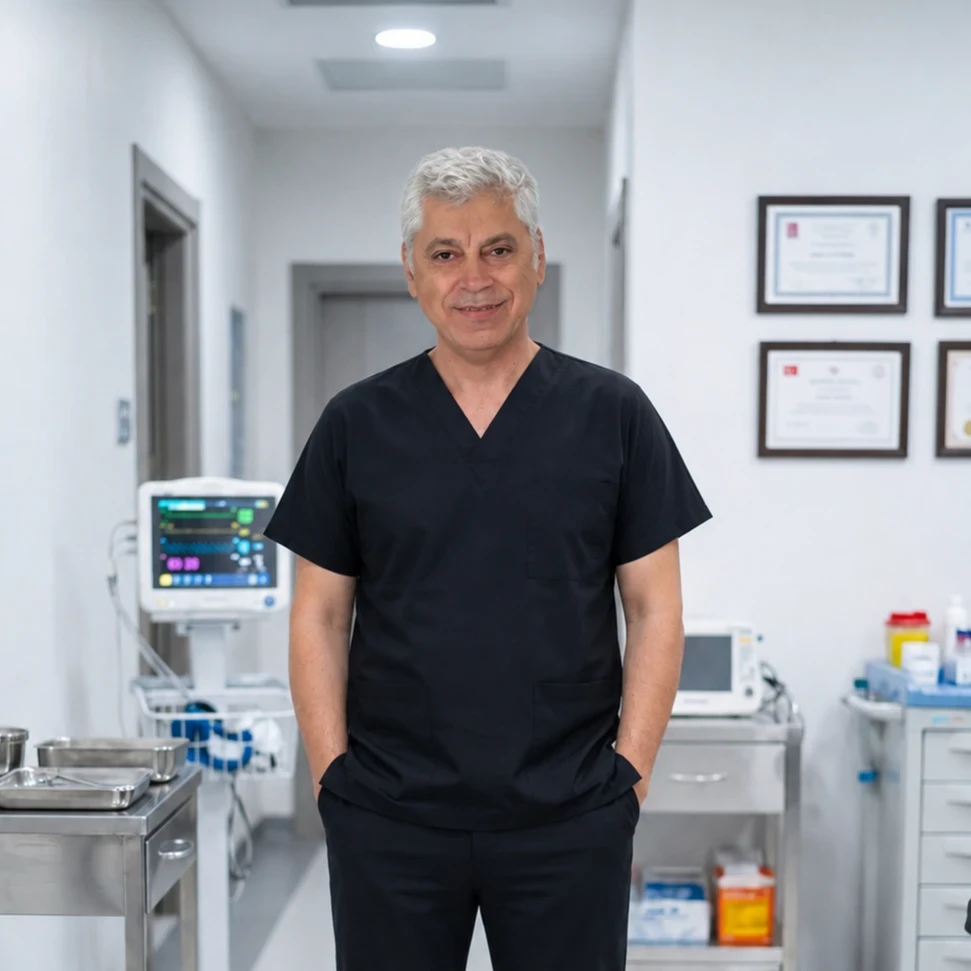
Using an Operating Room for Dental Treatment
What Options May Be Considered If You Cannot Be Treated in the Dental Chair?
Most dental treatments can be carried out while the patient is awake and under local anesthesia. However, for some people it can be difficult to stay in the dental chair for a long time, tolerate procedures inside the mouth or cooperate as needed during treatment.
Severe fear of the dentist, a marked gag reflex, certain physical limitations, communication or mobility difficulties experienced by patients with special healthcare needs , and age-related cooperation difficulties in some children can affect how treatment is planned.
In situations like these, patients and families often ask:
“I have a dentist I trust, but I can’t be treated in the dental chair. Can my own dentist perform my treatment under general anesthesia?”
When certain conditions are met, it may be possible for a dentist to carry out their own patient’s dental treatment under general anesthesia or an appropriate form of sedation, at another healthcare facility that has the infrastructure required for this service .
In everyday language, this is sometimes called “operating room rental.” From the patient’s perspective, however, it is not accurate to think of the process simply as renting an operating room. It is a medical process in which dental treatment and anesthesia care are planned together.
Can a Patient Rent an Operating Room Themselves?
The expression “operating room rental” can easily be misunderstood.
A patient does not usually rent an operating room directly, the way one would book a hotel room or a meeting hall, and then bring their dentist there.
The process is carried out after the dentist makes the necessary arrangements with a suitable healthcare facility, the patient’s dental treatment is planned and the patient is medically assessed by an anesthesiologist.
Under the current regulations on private oral and dental health facilities in Turkey, diagnostic and treatment procedures under sedation or general anesthesia cannot be performed in private dental practices or dental polyclinics. However, there are provisions allowing independently practicing dentists working at these facilities to carry out their patients’ procedures under general anesthesia or sedation at other suitable healthcare facilities, after submitting the required notification.
So, from the patient’s point of view, a more accurate question would be:
“Can I have dental treatment under general anesthesia with my own dentist at a suitable healthcare facility?”
Why Are Some People Unable to Be Treated in the Dental Chair?
There is no single reason why a patient may find it difficult to be treated in the dental chair.
For some people, dental anxiety or dental phobia is the main issue. Previous negative experiences, fear of needles, a sense of losing control or intense anxiety about procedures inside the mouth can make treatment difficult.
In other patients, a severe gag reflex can make it difficult to carry out procedures at the back of the mouth, take impressions or perform certain radiographic examinations.
People with certain neck, back or musculoskeletal problems may find it hard to stay in the same position for a long time.
In patients with special healthcare needs, sensory sensitivities, communication differences or involuntary movements can affect the treatment plan.
In children, age, developmental level, previous experiences and the extent of the treatment needed are important.
However, the presence of any of these situations does not automatically mean that general anesthesia is required.
Is General Anesthesia Always the First Option?
No.
In dentistry, the goal is not to steer the patient toward the most extensive anesthesia method available, but to identify the appropriate method by which treatment can be carried out.
For some patients, giving detailed information about the procedure, keeping appointments short or dividing treatment into stages may be sufficient.
Some people can be treated comfortably under local anesthesia.
For suitable patients, sedation options may be considered. In other clinical circumstances, general anesthesia may be discussed.
For children, current pediatric dentistry practice also emphasizes that there is a range of options, from behavior guidance techniques to sedation and general anesthesia, and that the method should be assessed on an individual basis .
For this reason, before asking “Can I have general anesthesia?” , the important question should be “Which method can my treatment be carried out with?”
Can My Own Dentist Perform My Treatment in an Operating Room?
Many patients may wish to continue their treatment with a dentist they have known and trusted for years.
Current legislation in Turkey allows dentists practicing independently in a private practice or polyclinic to carry out their patients’ procedures under general anesthesia or sedation at other suitable healthcare facilities, provided that the specified conditions are met.
For this, however, the healthcare facility where the dentist will work must have suitable infrastructure and the necessary authorizations for general anesthesia .
While your dentist carries out your dental treatment, the anesthesiologist works within a separate area of responsibility.
The dentist performs the oral and dental treatment, while the anesthesiologist manages the anesthesia and monitors the patient’s vital functions.
What Happens Before General Anesthesia?
First, the dental treatment needs must be determined.
Based on the examination and any necessary imaging, the dentist assesses which teeth require treatment. The extent of fillings, root canal treatment, extractions, surgical procedures or other dental treatments is planned as far as possible before the procedure.
The patient is then assessed by an anesthesiologist.
This assessment may take into account the patient’s existing medical conditions, medications, known allergies, previous surgeries and past anesthesia experiences.
If considered necessary, additional tests or an assessment from another specialty may be requested.
Not every patient needs the same blood tests or investigations. These requirements may be determined according to the patient’s medical condition.
What Happens During General Anesthesia?
Once general anesthesia begins, the patient is unconscious.
Throughout the procedure, the anesthesia team monitors the patient’s breathing, circulation and other necessary physiological parameters.
Parameters such as heart rhythm, blood pressure, oxygenation and breathing are monitored in a way that suits the anesthetic technique used and the patient’s condition.
Meanwhile, the dentist carries out the previously planned dental treatment.
Patient monitoring during anesthesia is not simply about “putting someone to sleep.” One of the anesthesiologist’s core responsibilities is to assess the patient’s physiological condition throughout the procedure and provide the necessary support when needed.
Are All Dental Treatments Done in a Single Session?
When dental treatment under general anesthesia is planned, patients often ask whether all procedures can be completed in the same session.
In some cases, several dental procedures may be planned for the same session. However, the use of general anesthesia does not mean that every tooth in the mouth will be treated or that all treatments will necessarily be finished in a single session.
The extent of treatment is decided by assessing the current condition of the teeth, the nature of the procedures to be performed, the patient’s general health and the length of the procedure.
The aim is not to perform as many procedures as possible, but to carry out the necessary dental treatment appropriately.
Is General Anesthesia Safe?
This is one of the most frequently asked questions about general anesthesia.
As with any medical procedure, it is not accurate to speak of zero risk with general anesthesia.
Risk is not the same for everyone. The patient’s age, general health, medications, coexisting medical conditions and planned procedures can affect the individual risk assessment.
For this reason, the question “Is general anesthesia safe?” should not be answered solely on the basis of general information found online.
The anesthesiologist assesses the patient’s medical characteristics to determine their individual risks and the method that can be used.
Appropriate monitoring, the necessary anesthesia equipment, a trained healthcare team and post-procedure follow-up facilities are the core components of anesthesia care.
Is the Process Different for Patients with Special Healthcare Needs?
For patients with special healthcare needs, general anesthesia is not always the first option.
Some individuals can be treated in a conventional dental setting thanks to environmental adaptations, appropriate communication and short appointments.
For some people, sedation may be considered. For individuals with different needs, general anesthesia may be one of the options.
Current guidelines also recommend that, for people with special healthcare needs, the treatment plan be individualized according to the person’s way of communicating, general health and treatment needs.
The name of a diagnosis alone is not sufficient for deciding on general anesthesia.
What Happens After Treatment?
Once the dental procedures are completed, the anesthesia is stopped and the patient is brought through the waking-up process in a controlled manner.
At this stage, the patient’s level of consciousness, breathing and circulation are monitored.
Some people may temporarily experience drowsiness, tiredness, nausea or a sore throat . Not every patient’s recovery is the same.
The decision to discharge is made by assessing the patient’s general condition, the dental procedures performed and their recovery after anesthesia.
While some patients can be discharged on the same day, others may need to be monitored for longer.
What Should Patients Ask Before Making a Decision?
When dental treatment in an operating room setting is being considered, it may be helpful for the patient or their family to find out the answers to the following questions:
Why is sedation or general anesthesia being considered?
Is local anesthesia or another method possible?
Who will carry out the dental treatment?
Who will manage the anesthesia?
Which procedures are planned?
What are my individual anesthesia risks?
How will I be followed up after treatment?
What should I be careful about after discharge?
The purpose of these questions is not to steer the patient toward general anesthesia, but to make the decision-making process easier to understand.
Conclusion
Having difficulty being treated in the dental chair does not mean that dental treatment cannot be carried out at all.
Alternative methods may be considered because of severe dental anxiety, a gag reflex, certain physical limitations, cooperation difficulties in childhood or the different needs of patients with special healthcare needs .
For some patients, behavioral approaches and local anesthesia may be sufficient, while for others sedation or general anesthesia may be discussed.
In the process commonly referred to as “operating room rental,” the patient does not rent an operating room directly. The dentist plans the dental treatment at a healthcare facility that complies with regulations and suits the patient’s needs, while the anesthesiologist assesses the patient from an anesthetic perspective and manages the anesthesia process.
If the patient wishes to continue with their current dentist, the conditions under which the dentist can work at a suitable healthcare facility should be assessed separately.
The most important point is that the appropriate method for the patient is determined individually, based on the assessments of the dentist and the anesthesiologist.
This article has been prepared for general information purposes. Decisions about sedation, general anesthesia or dental treatment should be planned individually by the relevant healthcare professionals after assessing the person’s medical condition and dental needs.
Dr. İHSAN GÜRSOY
Dentist
38 yılı aşkın klinik tecrübesiyle ağız ve diş sağlığı, implantoloji, cerrahi diş çekimleri ve genel anestezi/sedasyon altında çoklu diş tedavileri alanında uzman hekimdir. Yüzlerce hastada korkusuz, ağrısız ve konforlu ameliyathane diş tedavisi süreçlerini bizzat yönetmiştir.
Would You Like to Book an Appointment?
Book an appointment at a time that suits you, or give us a call.