
Fillings Under Sleep for Children: When Might General Anesthesia Be Needed?
How tooth decay is treated in children does not always depend solely on the size of the dental problem. The child's age, developmental level, ability to communicate with the dentist, cooperation with treatment, dental anxiety and the scope of the procedures required also determine how treatment will be carried out.
Particularly in early childhood, some children may not yet be developmentally able to stay in the dental chair for long periods, keep their mouth open, or understand why several procedures need to be done. On the other hand, many children can gradually adapt to the dental setting with appropriate communication and behavior guidance techniques.
Phrases that parents often search for online, such as “fillings under sleep”, “putting a child to sleep to have their teeth fixed” or “sleep dentistry for children”, are not the names of medical procedures. These phrases are mostly used to describe pediatric dental treatment performed under general anesthesia.
General anesthesia is one of the approaches that can be used in pediatric dentistry; however, it is not automatically necessary for every child who has cavities, is afraid of the dentist or is very young. The current approach of the American Academy of Pediatric Dentistry also states that a range of options exists, from communication, familiarization and behavior guidance techniques to sedation and general anesthesia, and that the method should be chosen according to the child's individual needs.
What Are “Fillings Under Sleep”?
Although the phrase “fillings under sleep” suggests that only fillings are placed, dental treatment planned under general anesthesia may be more comprehensive than that.
General anesthesia is a controlled and reversible state of unconsciousness induced by medication. The child is not aware of what is happening around them during the procedure. Throughout anesthesia, the child's breathing, circulation and other necessary physiological functions are monitored by a Specialist in Anesthesiology and Reanimation.
The dentist, in turn, assesses the child's oral and dental health and performs the necessary dental procedures.
Depending on the child's needs, these procedures may include fillings, pulp treatment of primary (baby) teeth, root canal treatment of suitable teeth, tooth extractions and various preventive or restorative procedures.
Receiving general anesthesia does not mean that all teeth will be extracted or that every dental procedure will necessarily be completed in a single session.
The scope of treatment is determined by the findings inside the child's mouth.
Does Every Child Need General Anesthesia?
No.
The fundamental approach in pediatric dentistry is to provide treatment, whenever possible, using methods suited to the child's age and developmental level.
Some children may be anxious at their first appointment but can gradually get used to the dental environment. Explaining the procedures in an age-appropriate way, showing the dental instruments beforehand, keeping appointments short and communicating positively can make treatment easier for many children.
The current AAPD guideline also considers behavior guidance techniques such as communication, tell-show-do, desensitization, distraction and positive reinforcement to be among the basic options. Advanced methods such as sedation and general anesthesia are addressed separately when needed.
For this reason, a child simply being afraid or having cavities in a few teeth does not mean that general anesthesia will be used.
When Can General Anesthesia Be Considered for Very Young Children?
In young children, developmental capacity matters as much as chronological age.
It may not always be realistic to expect a three- or four-year-old child to stay still during lengthy dental procedures and follow every instruction throughout treatment. That said, age alone is not the deciding criterion.
While some young children can tolerate short procedures well, some older children may have difficulty with treatment because of intense anxiety or other reasons.
General anesthesia may be considered particularly for children in whom necessary dental treatment cannot be carried out despite appropriate behavior guidance techniques.
The urgency of treatment, the presence of pain or infection, and whether it is appropriate to postpone treatment are also taken into account in the decision-making process.
Does a Child with Many Cavities Need to Be Put to Sleep?
Having many cavities indicates a significant need for dental treatment, but on its own it is not an indication for general anesthesia.
If the child cooperates well with treatment, the procedures can be divided across several appointments and performed under local anesthesia.
On the other hand, when young age, widespread dental problems and serious difficulty cooperating with treatment are all present at the same time, general anesthesia may be one of the options.
Repeatedly postponing the treatment of advanced cavities that cause pain or infection, in particular, can allow the existing dental problem to progress. However, this should not lead to the conclusion that “if there are many cavities, general anesthesia is always required”.
The treatment method should be determined for each individual child.
Do Children Who Are Very Afraid of the Dentist Need General Anesthesia?
Fear of the dentist is common among children.
A previous painful experience, fear of needles, the sound of dental instruments or a feeling of losing control in an unfamiliar environment can increase a child's anxiety.
However, general anesthesia is not the first option for every child who experiences intense fear.
First, an effort can be made to understand the source of the child's fear. Appropriate communication, gradual familiarization with the clinical environment and behavior guidance techniques can help many children.
Sedation may also be considered for suitable children.
General anesthesia may come into consideration for some children in whom necessary treatment cannot be carried out with these methods because of intense dental anxiety.
It cannot be said that general anesthesia will necessarily eliminate fear of the dentist in the future or definitely prevent psychological trauma. It remains important for the child to have regular, positive dental experiences in the years that follow.
Do Children with Special Healthcare Needs Require “Sleep Dentistry”?
For children with autism spectrum-related characteristics, Down syndrome, cerebral palsy, or other developmental, cognitive or motor control-related needs, dental treatment should be planned on an individual basis.
Having special healthcare needs or a particular diagnosis does not, on its own, mean that general anesthesia is required.
Some children can be treated in a standard clinical setting with appropriate communication methods, shorter appointments or sensory adaptations.
For some, sedation may be considered.
In some cases where the necessary dental procedures cannot be carried out by other means, or where the child's individual characteristics make standard treatment considerably more difficult, general anesthesia may come into consideration.
The fundamental approach is to decide based not on the diagnosis, but on the child's individual needs.
General Anesthesia for Children with a Strong Gag Reflex
Some children may gag noticeably when an X-ray sensor, dental instrument or impression material is placed in their mouth.
The gag reflex is a natural protective reflex and may be more pronounced in some people. Anxiety can also intensify this reflex.
First, methods that may make it easier for the child to tolerate the procedure are considered. Short working periods, suitable dental instruments, effective removal of fluid from the mouth or, in certain situations, alternative impression techniques may help.
In some children in whom necessary dental procedures cannot be performed because of gagging, nausea or vomiting, sedation or general anesthesia may also be considered.
General anesthesia, however, does not permanently treat the underlying cause of a strong gag reflex.
How Is a Child Assessed Before General Anesthesia?
Once a decision for general anesthesia has been made, one of the most important steps is the pre-procedure medical assessment.
The Specialist in Anesthesiology and Reanimation assesses the child's general health, current medications, known allergies and any previous anesthesia or surgical procedures.
It is also important to report any significant anesthesia-related problems that have occurred in the family.
The Royal College of Anaesthetists recommends that, before anesthesia, the child's current health, medications, allergies and previous anesthesia experiences, as well as any recent cough, cold, diarrhea or vomiting, be shared with the anesthesia team.
Not every child needs the same blood tests. The assessments required are determined according to the child's health status.
Why Is Fasting Important Before General Anesthesia?
The anesthesia team will tell the family at what time the child needs to stop eating and drinking.
These instructions are part of the preparation aimed at reducing the risk associated with stomach contents entering the airway during anesthesia.
The personal instructions the child receives from the anesthesia team should be followed, rather than general fasting times found online.
If the child accidentally eats or the preparation instructions cannot be followed, this information should not be withheld from the healthcare team.
Regularly taken medications should also not be stopped without a physician's advice.
Are All Teeth Treated in a Single Session Under General Anesthesia?
Under general anesthesia, for suitable children, several dental procedures can be planned in the same session.
For children who have difficulty coping with repeated appointments, this can be an advantage in treatment planning.
However, the expectation that “once the child is put to sleep, all of their teeth will definitely be finished” is not accurate.
A more detailed examination of the mouth during the procedure may reveal new findings. Some treatments may also require several stages.
The aim is not to perform as many procedures as possible; it is to carry out the clinically necessary procedures to an appropriate extent.
Is General Anesthesia Safe for Children?
This is one of the questions parents ask most often.
General anesthesia is a medical method that is also used in children, but it is not entirely risk-free.
The child's age, general health, coexisting conditions, airway characteristics and the planned procedures all affect the individual risk assessment.
After the procedure, some children may experience nausea, vomiting, drowsiness, throat discomfort or temporary restlessness. It has been reported that young children in particular may experience brief confusion or agitation while waking up.
For this reason, it is not appropriate to give a personalized, definitive answer online to questions such as “Will my child definitely wake up from anesthesia?” or “Is there no risk at all?”
A child's individual anesthesia risk should be assessed by a Specialist in Anesthesiology and Reanimation.
Can a Child Go Home on the Same Day After General Anesthesia?
Once the dental treatment has been completed, anesthesia is ended and the child is monitored during the recovery period.
Breathing, circulation, level of consciousness and overall clinical condition are assessed. Any necessary treatment can be planned for pain or discomfort related to the dental procedures performed.
For suitable children, after the necessary observation and clinical assessment, same-day discharge may be considered.
The Royal College of Anaesthetists also states that going home on the same day may be possible if the child has recovered sufficiently and the anesthesia and treatment teams consider it appropriate.
However, the same discharge time does not apply to every child.
Will Cavities Never Come Back After “Fillings Under Sleep”?
Having all existing cavities treated under general anesthesia does not mean that the child will not develop new cavities in the future.
General anesthesia does not treat the cause of tooth decay; it is an anesthesia method that makes it possible to carry out the necessary dental procedures.
After treatment, regular toothbrushing, age-appropriate fluoride use, a review of dietary habits and regular dental check-ups remain important.
Especially for children who have previously had widespread tooth decay, preventive dental follow-up is a key part of long-term oral health.
What Should Parents Ask Before Making a Decision?
Rather than focusing only on the question “Is general anesthesia safe?”, it may be more helpful for parents to understand why treatment has been planned this way.
Why is general anesthesia being considered?
Can my child be treated with local anesthesia or behavior guidance techniques?
Could sedation be a suitable alternative?
Which procedures will be performed on which teeth?
Is it expected that all treatment will be completed in the same session?
What are my child's individual risks with regard to anesthesia?
How should we prepare before the procedure?
What should we expect after the procedure?
Discussing these questions openly with the dentist and the anesthesia team can help the family better understand the process.
Conclusion: When Might Fillings Under Sleep Be Needed for Children?
Pediatric dental treatment under general anesthesia, commonly known as “fillings under sleep”, is not a routine approach for every child.
Young age and a developmental inability to participate in treatment, intense dental anxiety, certain special healthcare needs, a strong gag reflex or the need for extensive dental treatment may lead to general anesthesia being considered.
However, a child being young, being afraid or having many cavities does not, on its own, mean that general anesthesia is required.
First, options such as communication and behavior guidance techniques suited to the child's age and developmental level, local anesthesia and, where appropriate, sedation should be considered. General anesthesia may be one of the options for some children in whom necessary dental treatment cannot be carried out with these approaches or who have other clinical needs.
While the dentist plans the child's oral and dental treatment, the Specialist in Anesthesiology and Reanimation carries out the child's anesthesia assessment and anesthesia management.
The main goal is not simply to “put the child to sleep” or to complete as many procedures as possible in a single session; it is to plan the necessary dental treatment in a way that suits the child's health, developmental level and individual needs.
This article has been prepared for general information purposes. Decisions about sedation, general anesthesia or dental treatment in children should be planned individually by the relevant healthcare professionals following the child's medical and dental assessment.
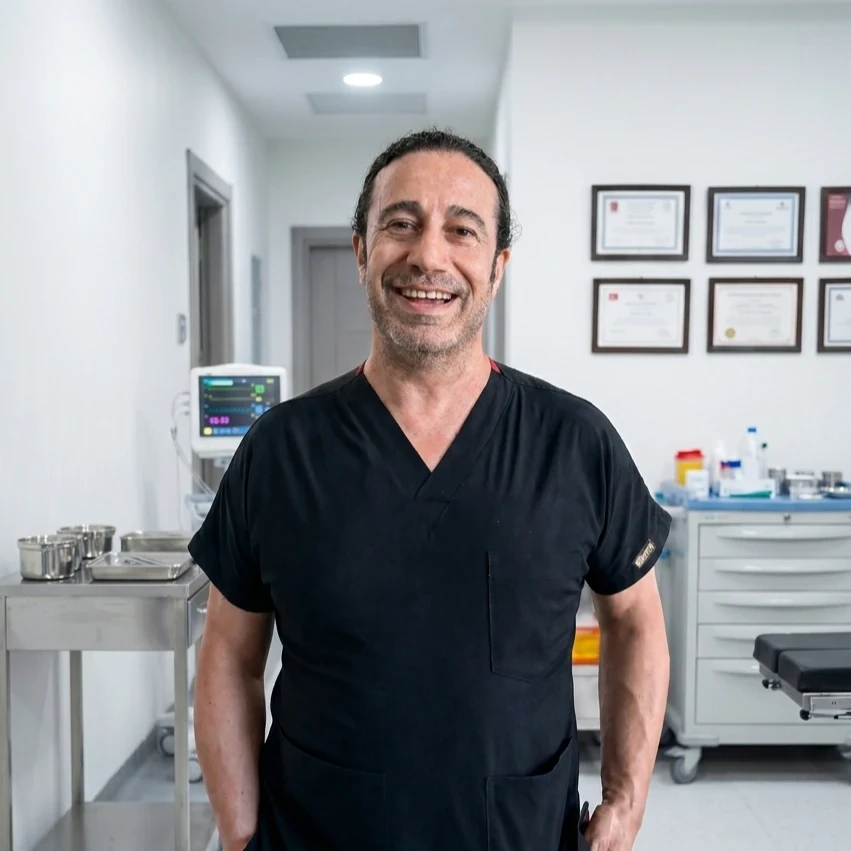
Dr.CEMAL BEKTAŞ
15 yılı aşkın uzmanlık deneyimiyle genel anestezi, sedasyon uygulamaları ve ameliyathane hasta güvenliği süreçlerinde uzmanlaşmıştır. Diş hekimliğinde ağrısız ve konforlu ameliyathane cerrahisi anestezi yönetimini başarıyla yürütmektedir.
Have a question?
Book an appointment to get a specialist's opinion on your dental health.
Book a Free Consultation