
How Is Dental Treatment Provided for Patients with Special Healthcare Needs?
Oral and dental health matters for everyone; however, for some individuals, maintaining daily oral care, visiting a dentist regularly or undergoing dental procedures in a standard clinical setting may require more planning. Dental treatment for patients with special healthcare needs is not only about treating existing dental problems. Communication style, sensory sensitivities, movement control, medications, coexisting conditions, the person's ability to take part in treatment and the support available from caregivers should all be considered together.
The dental needs of individuals with autism spectrum–related traits, Down syndrome, cerebral palsy, developmental or cognitive differences, or neurological conditions, as well as those who need mobility support or rely on others for daily care, can vary considerably from one person to another.
For this reason, the core approach is not to categorize a person by diagnosis alone, but to build a dental treatment plan around the individual's own needs.
Having special healthcare needs does not mean that a person must be treated under sedation or general anesthesia. Some individuals can receive treatment under local anesthesia in a standard dental chair, while for others, shorter appointments, adapted communication methods or changes to the environment may be sufficient. In suitable patients for whom the necessary dental treatment cannot be carried out with these approaches, sedation or general anesthesia may also be considered.
Why Is Oral and Dental Health Important for Patients with Special Healthcare Needs?
Tooth decay, gum disease, oral infections and missing teeth are not problems that affect the mouth alone. Pain can affect eating, sleep patterns, daily behavior and overall quality of life.
Some individuals, particularly those with communication difficulties, may not be able to clearly express where the pain is or how severe it is. In such cases, restlessness, refusing food, touching the face, changes in sleep patterns or changes in behavior may sometimes be the first noticeable sign of a dental problem.
The current guidance of the American Academy of Pediatric Dentistry also points out that patients with special healthcare needs may have more unmet dental needs because of their health status, sensory characteristics, behavioral challenges and difficulties accessing healthcare. Delays in regular preventive and restorative dental care can lead to pain, loss of function and the need for more extensive treatment.
The goal, therefore, is not only to intervene once a problem arises, but to make preventive dental care as sustainable as possible.
Is Treatment the Same for Every Patient with Special Healthcare Needs?
No.
Two people with the same medical or developmental diagnosis may respond to dental treatment in completely different ways.
For example, one individual with autism spectrum–related traits may communicate comfortably with the dentist and have routine treatment under local anesthesia, while another may show marked sensory sensitivity to light, sound, touch or stimuli around the mouth.
Similarly, not every person with Down syndrome or cerebral palsy has the same communication ability, movement control, general health or ability to cooperate with dental treatment.
For this reason, a diagnosis alone should not determine the dental or anesthetic approach to be used.
Treatment planning considers the person's level of understanding and communication, whether they can tolerate an oral examination, movement control, mouth opening, gag reflex, the extent of existing dental problems and any coexisting medical conditions.
How Is the First Examination Planned?
For some patients with special healthcare needs, the aim of the first appointment may be to get to know the person, their needs and how they respond to the dental environment, rather than to carry out comprehensive treatment on the same day.
Whenever possible, it is important to communicate directly with the person. More time may be needed for communication, or simple and short sentences, visual explanations or the communication method the person is used to may be used.
Family members or caregivers can also provide valuable information. What makes the person anxious, which communication style they respond to best, how daily oral care is carried out and their previous dental experiences may all influence the treatment plan.
However, the presence of a caregiver should not mean that the patient is left out of the assessment and information process.
Involving the person in the process to the extent they can understand, and explaining the planned procedures in a way that suits them, should be one of the core principles.
What Factors Can Make Treatment More Difficult?
The factors that make dental treatment more challenging for patients with special healthcare needs vary from person to person.
Some people may find it difficult to stay in the same position for long periods. Involuntary movements can affect how dental procedures are carried out. Some individuals may be unable to keep their mouth open for long, or may have a strong gag reflex.
Sound, light, vibration, the noise of the suction device, the smell of dental equipment or being touched around the mouth may cause significant discomfort for some patients.
Anxiety is also an important factor. A person who has had a difficult dental experience in the past may react strongly at a new appointment even before any procedure begins.
In addition, epilepsy, cardiovascular disease, breathing problems or other systemic conditions, as well as regularly used medications, can affect dental and anesthetic planning.
For this reason, treatment needs to be planned not only according to the problem in the mouth, but together with the person's overall medical condition and functional needs.
Can Dental Treatment Be Performed Under Local Anesthesia?
Yes.
Having special healthcare needs does not mean that dental treatment cannot be carried out under local anesthesia.
For many individuals who are able to cooperate with treatment, fillings, tooth extractions, periodontal procedures and other dental treatments can be performed under standard local anesthesia.
For some patients, it may be enough to divide treatment into shorter sessions, keep the same care team, schedule appointments to fit the person's daily routine or make the clinical environment as predictable as possible.
Particularly for people with sensory sensitivities, showing the dental instruments beforehand, explaining the sequence of the procedure in simple terms or reducing unnecessary environmental stimuli may help.
For this reason, it is important to consider simpler and less invasive approaches before moving on to general anesthesia.
When Can Sedation Be Considered?
Sedation is one of the methods that may help reduce anxiety and awareness of the surroundings in some patients with special healthcare needs.
Sedation can be given at minimal, moderate or deep levels, and the patient's level of consciousness varies depending on the method used.
However, it cannot be said that sedation will completely eliminate involuntary movements in every patient, reliably suppress a strong gag reflex or guarantee that treatment will be completed.
Sedation may not be sufficient for some individuals, particularly those whose movement control is significantly limited or with whom communication is not possible.
In addition, as sedation becomes deeper, it may affect the airway and breathing, so appropriate medical assessment, monitoring and the capacity to intervene when needed become essential.
Sedation is not a simple or completely risk-free alternative to general anesthesia. Which method is more appropriate should be assessed according to the patient's characteristics and the extent of the planned treatment.
When Might Dental Treatment Under General Anesthesia Be Considered?
For some patients with special healthcare needs, it may not be possible to carry out the necessary dental procedures using local anesthesia, communication and behavioral adjustments, or appropriate sedation methods.
For example, in some patients who have uncontrollable involuntary movements, cannot tolerate treatment inside the mouth, or whose treatment cannot be completed under standard conditions because of the extent of dental care needed, dental treatment under general anesthesia may be considered.
During general anesthesia, the patient is in a state of controlled unconsciousness. While the Specialist in Anesthesiology and Reanimation monitors the patient's airway, breathing, circulation and other essential physiological functions, the dentist carries out the dental treatment.
In special care dentistry, coordination between the dental team, the anesthesia team and, when needed, other healthcare disciplines is important for patients who require general anesthesia. Current guidance from the Royal College of Anaesthetists also highlights the importance of individualized communication, perioperative care and multidisciplinary collaboration for this patient group.
However, having special healthcare needs is not, on its own, an indication for general anesthesia.
Are All Teeth Treated in a Single Session Under General Anesthesia?
In suitable patients for whom general anesthesia is planned, more than one necessary dental procedure can be carried out in the same session.
This approach may be part of treatment planning for some individuals who find it difficult to cope with repeated dental visits.
However, there is no rule that all dental treatment will necessarily be completed in a single session.
Dental implants, prosthetic treatments and some surgical procedures that require healing may need separate appointments. The treatment plan may also need to change following the detailed oral examination carried out during the procedure.
Likewise, the use of general anesthesia does not mean that teeth that can be saved will be extracted.
The main goal is not to do as many procedures as possible, but to plan the necessary treatment with the existing dental problems and the long-term prognosis of the teeth in mind.
Which Dental Treatments Can Be Performed?
Many different dental treatments can be provided for patients with special healthcare needs when they are necessary and feasible.
Fillings and other restorative procedures, root canal treatment on suitable teeth, tooth extractions, periodontal treatment and some surgical procedures may be part of the treatment plan.
Implant and prosthetic treatments may also be considered after assessing the person's oral anatomy, general health, ability to maintain oral care and options for long-term follow-up.
However, not every procedure that can be done is the right procedure for every patient.
Particularly for patients in whom long-term care may be difficult, the durability of the treatment, whether it will require check-ups or maintenance in the future and how the person's oral hygiene will be maintained should also be taken into account.
For this reason, preventive approaches, and approaches that preserve tooth structure wherever possible, are important.
Why Do General Health and Medications Matter?
Patients with special healthcare needs may have more than one medical condition at the same time.
Epilepsy, heart disease, respiratory problems, swallowing difficulties or other medical conditions can affect the dental and anesthetic approach.
Regularly used medications are also important. Some medications may be associated with dry mouth, gum changes or other effects in the mouth. In addition, the compatibility of any medications to be used during the planned dental procedures with the person's current treatment should be assessed.
For this reason, it is important to give the healthcare team complete information about medications and medical history.
If sedation or general anesthesia is planned, a separate anesthesia assessment is carried out. Not every patient needs the same tests; the necessary investigations are determined according to the person's health status.
How Should the Information and Consent Process Work?
Having special healthcare needs does not take away a person's right to be informed about their treatment and, as far as possible, to take part in decisions.
The patient should be informed, to the extent they can understand, about the planned treatment, alternative methods and the process.
Türkiye's Patient Rights Regulation also requires that, even when the consent of a legal representative is sufficient, the person should be informed to the extent they can understand and involved in treatment decisions as far as possible.
The fact that a caregiver or family member accompanies the patient does not automatically mean they have legal authority to give consent. Where required, consent should be obtained through the authorized legal representative in accordance with current legislation.
Throughout this process, the core approach is to protect the person's rights, privacy and the highest possible level of participation.
Why Is Follow-Up After Treatment So Important?
Completing comprehensive dental treatment under sedation or general anesthesia does not mean that oral health care is over.
The caregiver's role is especially important for individuals who cannot manage their daily oral care on their own.
Cleaning the teeth with the right technique, caring for the spaces between the teeth as much as possible, reviewing dietary habits and attending regular dental check-ups can help reduce the likelihood of new problems developing in the future.
General anesthesia does not prevent tooth decay or gum disease from recurring.
For this reason, one of the most important elements of long-term success is creating a realistic and sustainable preventive care plan that fits into the person's daily life.
Conclusion
Dental treatment for patients with special healthcare needs should be planned not only according to the person's medical diagnosis, but by considering their communication ability, sensory characteristics, movement control, general health, dental needs and options for long-term care together.
For some individuals, a standard clinical setting and local anesthesia may be sufficient. Others may need adjustments to appointment length, communication style or the clinical environment. Sedation may be considered in suitable patients.
For some individuals in whom the necessary dental treatment cannot be carried out with these methods, or who have other clinical requirements, dental treatment under general anesthesia may be an option.
Sedation and general anesthesia are not mandatory for every patient with special healthcare needs and should not be regarded as completely risk-free.
While the dentist plans the necessary dental treatment, the Specialist in Anesthesiology and Reanimation carries out the patient's anesthesia assessment and anesthesia management whenever sedation or general anesthesia is required.
The main goal is not only to treat existing dental problems, but to create an individualized, sustainable dental care plan that takes into account the person's rights, medical condition and long-term oral health.
This article has been prepared for general information purposes. Decisions about dental treatment, sedation or general anesthesia for patients with special healthcare needs should be planned individually by the relevant healthcare professionals based on the person's medical and dental assessment.
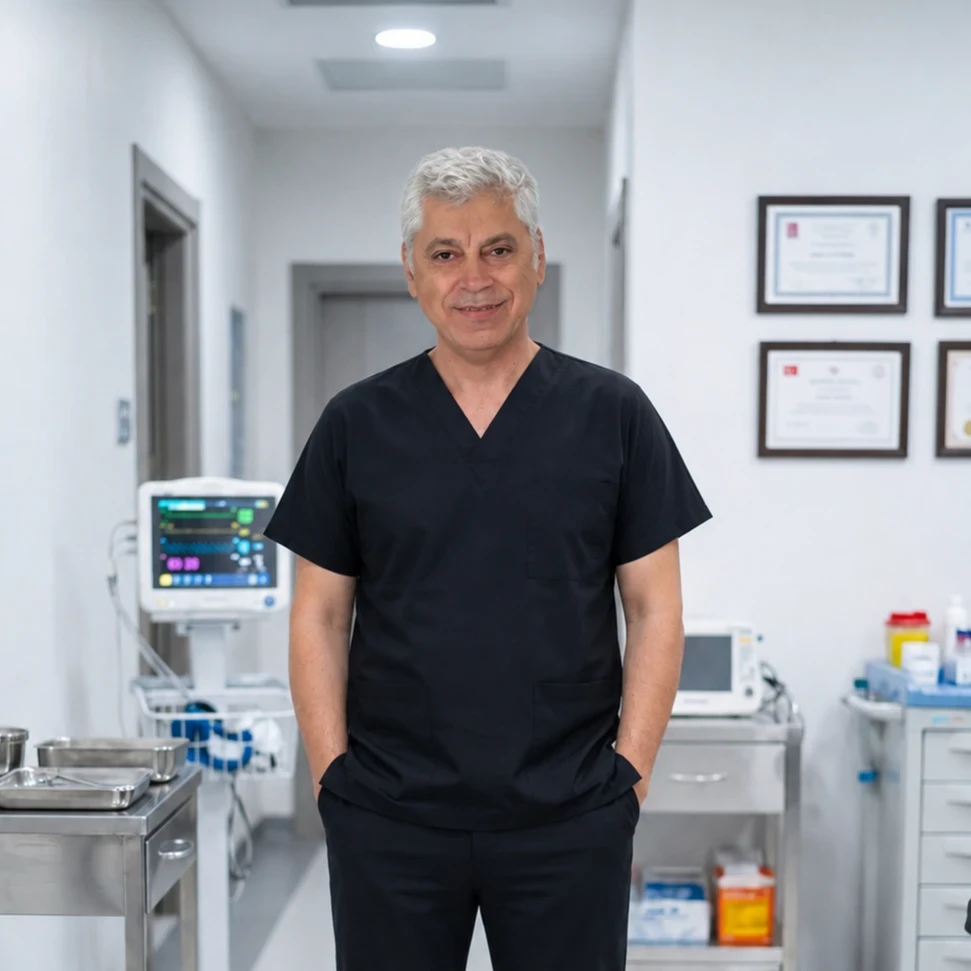
Dr. İHSAN GÜRSOY
38 yılı aşkın klinik tecrübesiyle ağız ve diş sağlığı, implantoloji, cerrahi diş çekimleri ve genel anestezi/sedasyon altında çoklu diş tedavileri alanında uzman hekimdir. Yüzlerce hastada korkusuz, ağrısız ve konforlu ameliyathane diş tedavisi süreçlerini bizzat yönetmiştir.
Have a question?
Book an appointment to get a specialist's opinion on your dental health.
Book a Free Consultation